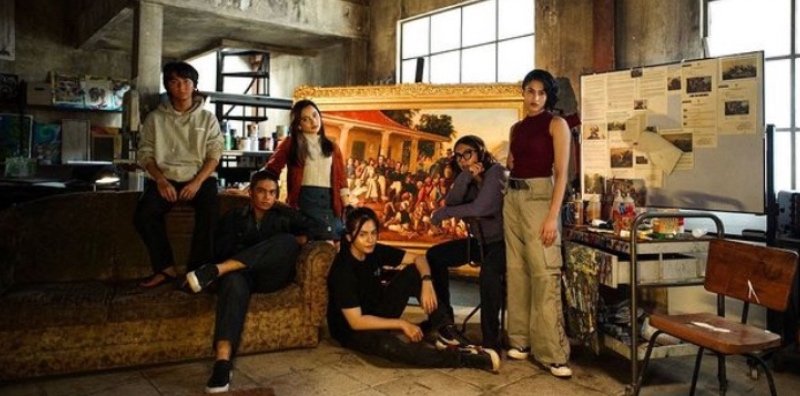



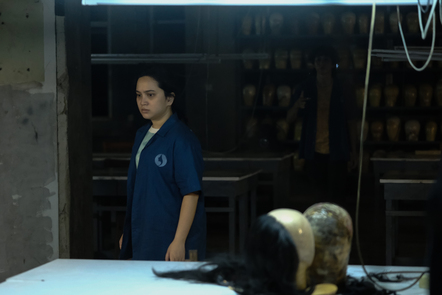
At a time when digital visual effects dominate modern filmmaking, Indonesian filmmaker Edwin chose a different path for his latest feature, Monster Pabrik Rambut .
Nearly 90 percent of the film’s fantasy and horror sequences were created using practical effects, minimizing CGI and relying on production techniques reminiscent of classic fantasy films from the 1980s.
This creative approach is one of the reasons why Monster Pabrik Rambut feels unlike most Indonesian horror films today. Produced by Palari Films and currently playing in theaters nationwide, the film presents an absurd, magical, and unsettling world built largely in front of the camera rather than inside a computer.
“Almost 90% of it is practical,” Edwin explained. “For the monster, for example, there is actually a person inside the costume. We also used a lot of wire and sling techniques. The moving hair was filmed underwater to create smoother movement. The computer was mainly used to combine everything together and make it feel more organic.”
From giant creatures and living strands of hair to the film’s many fantasy elements, most of the visual effects were physically created during production. This approach gives the film a tangible texture and presence that is often difficult to achieve through fully digital effects.
Creating a Retro Atmosphere Through Analog Film Technology
The film’s visual experimentation extends beyond practical effects. To strengthen the retro atmosphere that defines the world of Monster Pabrik Rambut , Palari Films employed a Digital-to-Film-to-Digital (DFD) workflow.
Through this process, footage originally captured digitally was transferred onto film stock before being scanned back into a digital format. The technique produces grain, color characteristics, and textures reminiscent of classic cinema while adding an organic quality that is difficult to replicate through digital grading alone.
From Petruk Gareng Comics to Fantasy Horror Imagination
In several interviews, acclaimed novelist and screenwriter Eka Kurniawan revealed that the film’s monster design was inspired by the grotesque creatures frequently featured in Petruk Gareng comics by Indonesian comic artist Tatang S.
These monsters are simultaneously funny and terrifying and terrifying precisely because of their absurdity. That unique combination became a major inspiration for Edwin as he developed the film’s distinctive fantasy horror universe.
The result is a film that avoids conventional horror formulas. Rather than relying on jump scares or familiar supernatural mythology, Monster Pabrik Rambut builds tension through surreal imagery, oppressive workplace environments, and characters who exist somewhere between reality and fantasy.
When Cinema Meets Comic Book Language
Edwin’s experimentation is particularly evident in the film’s final act. While many Indonesian horror films conclude with either realistic or supernatural resolutions, Monster Pabrik Rambut blends cinematic storytelling with comic book aesthetics.
Bright colors, expressive visual compositions, and storytelling techniques inspired by comic panels create a viewing experience that feels fresh, playful, and unconventional. The combination of horror, fantasy, and comic book influences gives the film a visual identity rarely seen in Indonesian cinema.
A Creative Collaboration Between Edwin, Eka Kurniawan, and Akiko Ashizawa
To bring this vision to life, Edwin reunited with Japanese cinematographer Akiko Ashizawa, who previously collaborated with him on Vengeance Is Mine, All Others Pay Cash.
Ashizawa is widely recognized for her work with acclaimed Japanese filmmaker Kiyoshi Kurosawa on films such as Tokyo Sonata and Journey to the Shore, where she developed a visual style highly attuned to space, atmosphere, and the tensions hidden within everyday life.
In Monster Pabrik Rambut , Ashizawa brings that cinematic sensitivity into Edwin’s surreal world. Through a visual approach that is both bold and carefully controlled, she helps transform Edwin’s absurd imagination into a richly detailed cinematic experience where everyday reality collides with the fantastical.
At the same time, Edwin once again collaborated with celebrated novelist Eka Kurniawan on the screenplay. Through the story of factory workers and a monster born from an exploitative labor system, the film offers a social critique of overwork culture and systems that reduce human beings to mere production machines.
Positive Audience Reactions
Since its theatrical release, Monster Pabrik Rambut has received strong responses from audiences who appreciate its unconventional take on horror.
Writer Ika Natassa praised the film for delivering a kind of strangeness rarely found in contemporary horror cinema.
“Honestly, this isn’t the kind of horror film that is easy to digest, but it successfully presents forms of weirdness that are rarely found in other horror offerings.”
Many viewers have also highlighted the film’s social commentary.
“ Monster Pabrik Rambut has a clear idea in criticizing the appropriation of excessive work culture and the treatment of people as mere machines,” wrote film account @ulasinema.
Others have interpreted the film as a reflection of contemporary economic realities and increasingly demanding work environments.
Through its combination of practical effects, retro-inspired visuals, comic book aesthetics, and sharp social commentary, Monster Pabrik Rambut offers something rarely seen in Indonesian horror: an absurd, imaginative, and deeply personal fantasy horror experience.
Monster Pabrik Rambut is now playing in theaters across Indonesia.